While Vegas Sleeps, Crypto Bettors Are Cashing In: The Time Zone Edge Nobody's Talking About
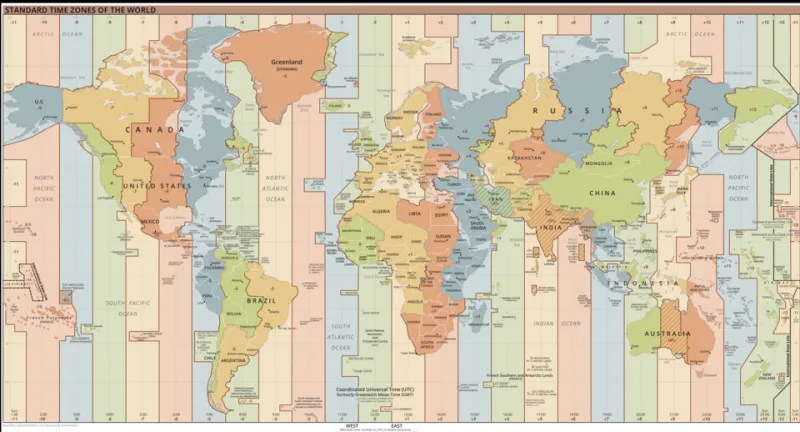
Photo: UnaitxuGV, Heitordp and others, Public domain, via Wikimedia Commons
There's a quiet revolution happening in sports betting, and it's not happening on the Las Vegas Strip or inside a DraftKings office. It's happening at 3 a.m. when a sharp bettor in Phoenix is placing a wager on a Korean baseball game using Bitcoin — and getting a line that a traditional sportsbook in New Jersey would never have left open.
This is time zone arbitrage. And if you haven't heard of it yet, that's actually good news for the people already doing it.
What Is Time Zone Arbitrage, Exactly?
Arbitrage in betting is the practice of exploiting price discrepancies across different markets. Classic arb involves finding two books that disagree on the same outcome — you bet both sides and lock in a profit regardless of the result. It's been around forever, and most sharp bettors know about it.
Time zone arbitrage is a variation on that theme, but the edge comes from when lines are set and updated rather than just where. Traditional sportsbooks operate on staffed trading floors. When a key injury drops in Tokyo at midnight Eastern time, the oddsmaker adjusting that line is either asleep, working a skeleton crew, or relying on automated systems that lag behind real-time information.
Crypto betting platforms, by contrast, run on decentralized infrastructure that doesn't take breaks. Smart contracts execute automatically. Liquidity pools adjust continuously. But here's the thing — not all of those adjustments happen instantly, and the windows between when news breaks and when odds move are where the money lives.
The Infrastructure Advantage That Makes This Possible
Legacy sportsbooks are built on centralized architecture. A single trading team manages line movement across every sport they offer. When you've got NFL, NBA, Premier League, Australian Rules Football, and Korean Baseball League all running simultaneously, something is always getting less attention than it deserves.
Crypto platforms like the ones gaining traction with US bettors operate differently. Peer-to-peer betting exchanges allow users to set their own prices. Decentralized protocols pull from multiple oracle feeds to set lines. Automated market makers (AMMs) adjust odds based on betting volume rather than a human's reaction to news.
This creates a fascinating inefficiency. When a human trader at a traditional book is asleep, their automated backup system is still running — but it's running on a delay. It's pulling data feeds that refresh every few minutes, not every few seconds. Meanwhile, a crypto platform's smart contract might be referencing the same underlying data but applying it to odds that haven't been manually reviewed since the previous business day.
That gap? That's your edge.
Real-World Scenarios Where This Plays Out
The Asian Market Window
Korean Baseball Organization (KBO) and Nippon Professional Baseball (NPB) games start in the early morning hours for US bettors — roughly 5 a.m. to 8 a.m. Eastern. Most traditional US-facing sportsbooks have thin overnight staffing when it comes to Asian markets. A starting pitcher scratch that gets announced at 6:15 a.m. Eastern might not trigger a line move at a major American book for 20 to 30 minutes.
On a crypto exchange where lines are set by peer-to-peer liquidity, that same information might sit stale even longer — because the bettors providing liquidity on that market are also asleep. The sharp bettor who's awake and monitoring injury feeds can hammer that line before anyone adjusts it.
European Soccer's Midweek Chaos
Champions League and Europa League midweek fixtures kick off in the afternoon for East Coast US bettors, but the lineup announcements drop roughly 75 minutes before kickoff — which is around 11:45 a.m. Eastern. Traditional books are fully staffed and react quickly. But for crypto platforms with thinner liquidity on specific prop markets (first scorer, exact score, etc.), those prop lines can lag significantly behind the main match odds.
A manager deciding to rest a key striker gets reflected in the match odds within seconds. The first-scorer prop on a crypto exchange? Sometimes that takes five to ten minutes to adjust. Five to ten minutes is a long time when you're talking about a player who just went from starting to bench.
The Sunday Night NFL Scramble
NFL game-day inactives are announced 90 minutes before kickoff. For Sunday 1 p.m. games, that's 11:30 a.m. Eastern. Books are fully alert. But Sunday night and Monday night games — those inactives drop at 6:30 p.m. and 7:30 p.m. Eastern respectively. Staffing thins out. Crypto platforms that rely on automated oracles rather than human traders can be especially slow to adjust second and third-tier props during these windows.
How to Actually Find and Use These Windows
This isn't a strategy you can run passively. Time zone arbitrage requires preparation and speed. Here's a practical framework:
1. Build a news monitoring stack. Set up alerts for injury reports, lineup announcements, and weather updates across every sport you're targeting. Twitter/X, official team feeds, and beat reporters are faster than any odds feed. You need the information before the line moves, not after.
2. Map out the low-staffing windows. For traditional books, overnight hours and early mornings are the softest. For crypto platforms, look for markets with thin liquidity — smaller leagues, obscure props, early-week lines on distant events.
3. Compare lines across platforms in real time. Odds comparison tools exist for a reason. When you see a line that hasn't moved on a crypto platform but has already moved on a traditional book, that's a signal worth investigating.
4. Understand the closing line. Professionals measure their edge against the closing line — the final odds just before an event starts. If you're consistently beating the closing line on crypto platforms in specific market windows, you're doing something right.
5. Manage your bankroll around timing. Don't go heavy on a stale line just because it looks soft. Confirm the underlying reason (injury news, lineup change, weather) before sizing up. Stale lines are sometimes stale for a reason — low interest, not inefficiency.
The Window Is Open, But Not Forever
Here's the honest reality check: as crypto betting platforms mature and attract more sophisticated liquidity providers, these gaps will shrink. The same thing happened with traditional arbitrage — it was a gold mine in the early 2000s and a grind by 2015. The inefficiencies that exist today on crypto platforms exist partly because the market is still young.
US bettors who get comfortable with crypto platforms now — who learn how lines move, where liquidity is thin, and which markets lag — are building knowledge that will pay dividends even as the easy edges disappear. The infrastructure advantage of decentralized betting isn't going away. The specific arbitrage windows will evolve, but the bettors who understand the mechanics will always find the next one.
The sportsbook that never sleeps has blind spots. Your job is to find them before everyone else does.